1
2
3
4
5
6
7
8
9
10
11
12
13
14
15
16
17
18
19
20
21
22
23
24
25
26
27
28
29
30
31
32
33
34
35
36
37
38
39
40
41
42
43
44
45
46
47
48
49
50
51
52
53
54
55
56
57
58
59
60
61
62
63
64
65
66
67
68
69
70
71
72
73
74
75
76
77
78
79
80
81
82
83
84
85
86
87
88
89
90
91
92
93
94
95
96
97
98
99
100
101
102
103
104
105
106
107
108
109
110
111
112
113
114
115
116
117
118
119
120
121
122
123
124
125
126
127
128
129
130
131
132
133
134
135
136
137
138
139
140
141
142
143
144
145
146
147
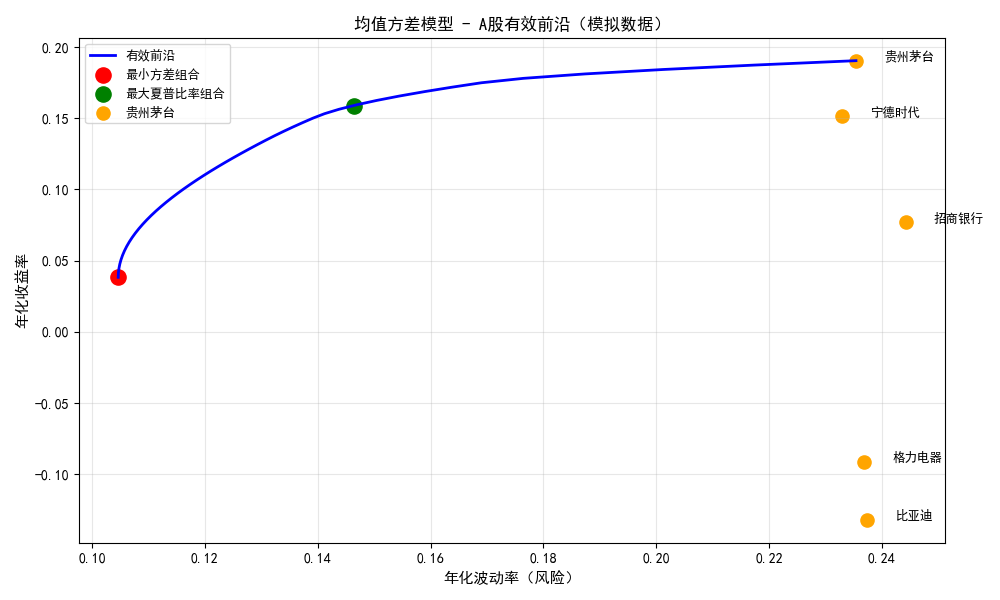
| 代码如下:
import pandas as pd
import numpy as np
import scipy.optimize as sco
import matplotlib.pyplot as plt
np.random.seed(42)
tickers = ['600519.SH', '300750.SZ', '600036.SH', '002594.SZ', '000651.SZ']
ticker_names = ['贵州茅台', '宁德时代', '招商银行', '比亚迪', '格力电器']
name_map = dict(zip(tickers, ticker_names))
n_days = 252 * 5
base_prices = [1000, 200, 30, 150, 30]
prices_data = []
for i in range(len(tickers)):
daily_ret = np.random.normal(0.0003, 0.015, n_days)
cum_ret = np.cumprod(1 + daily_ret)
price_series = base_prices[i] * cum_ret
prices_data.append(price_series)
prices = pd.DataFrame(
np.array(prices_data).T,
columns=tickers,
index=pd.date_range(start='2019-01-01', periods=n_days, freq='B')
)
daily_returns = np.log(prices / prices.shift(1)).dropna()
mu = daily_returns.mean() * 252
cov = daily_returns.cov() * 252
risk_free_rate = 0.02
def portfolio_performance(weights, mu, cov):
port_return = np.sum(mu * weights)
port_vol = np.sqrt(np.dot(weights.T, np.dot(cov, weights)))
sharpe_ratio = (port_return - risk_free_rate) / port_vol
return port_return, port_vol, sharpe_ratio
def minimize_volatility(weights, mu, cov):
return portfolio_performance(weights, mu, cov)[1]
def maximize_sharpe(weights, mu, cov):
return -portfolio_performance(weights, mu, cov)[2]
constraints = ({'type': 'eq', 'fun': lambda x: np.sum(x) - 1})
bounds = tuple((0, 1) for _ in range(len(tickers)))
initial_guess = np.array([1/len(tickers)] * len(tickers))
min_vol_result = sco.minimize(
minimize_volatility, initial_guess,
args=(mu, cov), method='SLSQP',
bounds=bounds, constraints=constraints
)
min_vol_weights = min_vol_result['x']
min_vol_return, min_vol_vol, _ = portfolio_performance(min_vol_weights, mu, cov)
max_sharpe_result = sco.minimize(
maximize_sharpe, initial_guess,
args=(mu, cov), method='SLSQP',
bounds=bounds, constraints=constraints
)
max_sharpe_weights = max_sharpe_result['x']
max_sharpe_return, max_sharpe_vol, _ = portfolio_performance(max_sharpe_weights, mu, cov)
target_returns = np.linspace(min_vol_return, mu.max(), 50)
target_vols = []
for target_ret in target_returns:
constraints_target = (
{'type': 'eq', 'fun': lambda x: np.sum(x) - 1},
{'type': 'eq', 'fun': lambda x: portfolio_performance(x, mu, cov)[0] - target_ret}
)
result = sco.minimize(
minimize_volatility, initial_guess,
args=(mu, cov), method='SLSQP',
bounds=bounds, constraints=constraints_target
)
target_vols.append(result['fun'])
target_vols = np.array(target_vols)
plt.rcParams['font.sans-serif'] = ['SimHei']
plt.rcParams['axes.unicode_minus'] = False
plt.figure(figsize=(10, 6))
plt.plot(target_vols, target_returns, 'b-', linewidth=2, label='有效前沿')
plt.scatter(min_vol_vol, min_vol_return, c='red', s=120, label='最小方差组合')
plt.scatter(max_sharpe_vol, max_sharpe_return, c='green', s=120, label='最大夏普比率组合')
for i, ticker in enumerate(tickers):
asset_vol = np.sqrt(cov.iloc[i, i])
asset_ret = mu[i]
plt.scatter(asset_vol, asset_ret, c='orange', s=90, label=ticker_names[i] if i==0 else "")
plt.text(asset_vol + 0.005, asset_ret, ticker_names[i], fontsize=9)
plt.xlabel('年化波动率(风险)', fontsize=11)
plt.ylabel('年化收益率', fontsize=11)
plt.title('均值方差模型 - A股有效前沿(模拟数据)', fontsize=12)
plt.legend(loc='upper left', fontsize=9)
plt.grid(True, alpha=0.3)
plt.tight_layout()
plt.show()
print("="*40)
print("均值方差模型计算结果(A股模拟数据)")
print("="*40)
print("\n【最小方差组合】(风险最低)")
print("-"*30)
for ticker, weight in zip(tickers, min_vol_weights):
print(f"{name_map[ticker]} ({ticker}): {weight:.2%}")
print(f"组合年化收益:{min_vol_return:.2%}")
print(f"组合年化波动率:{min_vol_vol:.2%}")
print("\n【最大夏普比率组合】(风险调整收益最高)")
print("-"*30)
for ticker, weight in zip(tickers, max_sharpe_weights):
print(f"{name_map[ticker]} ({ticker}): {weight:.2%}")
print(f"组合年化收益:{max_sharpe_return:.2%}")
print(f"组合年化波动率:{max_sharpe_vol:.2%}")
print(f"组合夏普比率:{(max_sharpe_return - risk_free_rate)/max_sharpe_vol:.2f}")
|